St. Maximilian Kolbe
Maria Kowalski|
Historian
The Knight of the Immaculata
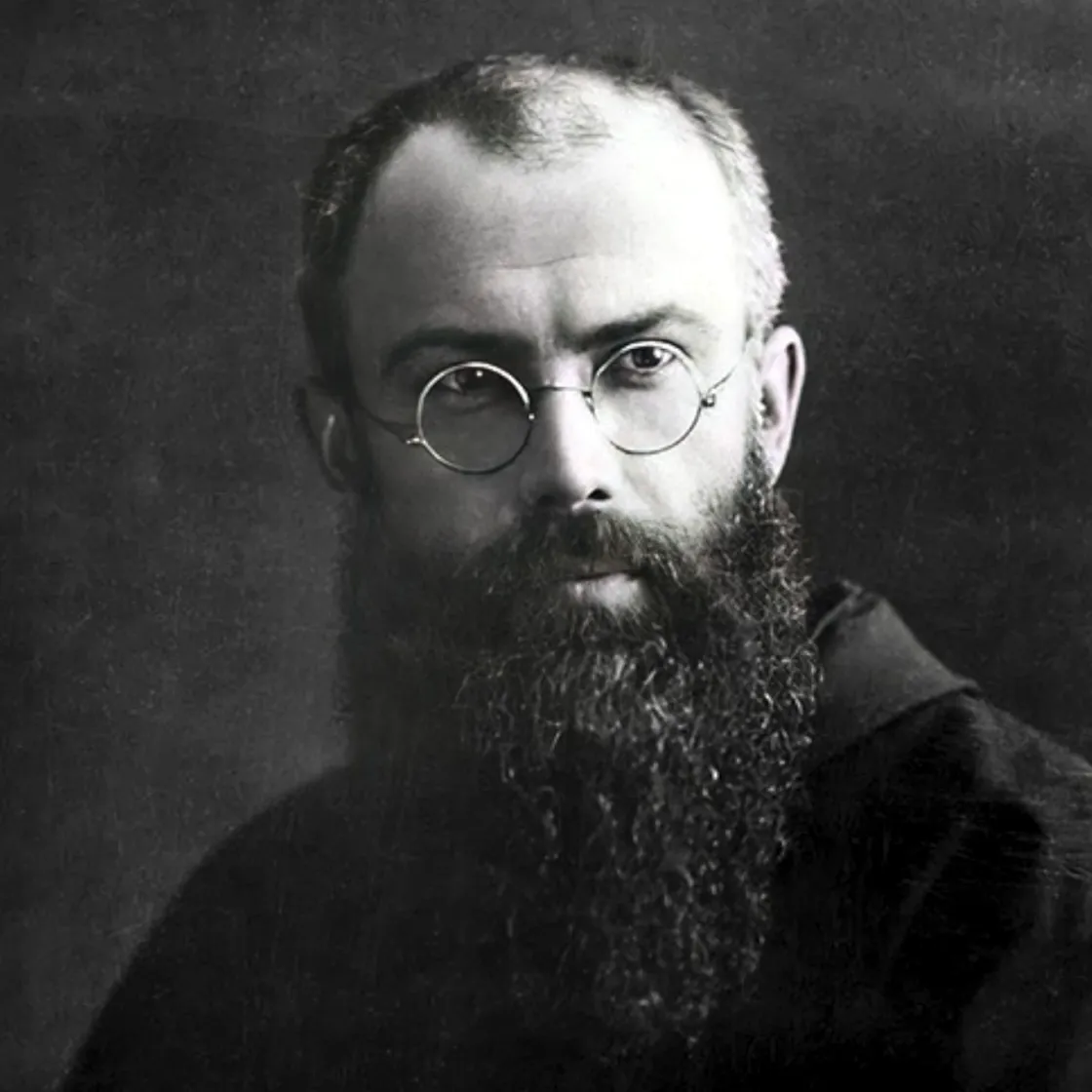
Saint Maximilian Kolbe (1894-1941) was a Polish Franciscan friar, priest, and martyr who became one of the most passionate advocates of the Miraculous Medal in the 20th century. His unwavering faith and ultimate sacrifice at Auschwitz continue to inspire millions worldwide.
Early Life and Vocation
Born Raymond Kolbe in Zduńska Wola, Poland, he joined the Franciscan Order at age 16 and took the name Maximilian. Deeply devoted to the Virgin Mary from childhood, he became a tireless promoter of Marian devotion throughout his life.
Spreading the Miraculous Medal
In 1917, Father Kolbe founded the Militia of the Immaculata, a movement dedicated to the conversion of sinners and enemies of the Church through Mary’s intercession. He distributed millions of Miraculous Medals worldwide and established monasteries across Europe, Asia, and the Americas, all centered on devotion to the Immaculate Virgin.
The City of the Immaculata
Father Kolbe built Niepokalanów, the “City of the Immaculata,” near Warsaw—a thriving community of friars engaged in publishing, radio broadcasting, and missionary work. At its peak, it housed over 700 friars and operated one of the largest Catholic publishing houses in the world, spreading devotion to the Miraculous Medal through print media.
Martyrdom at Auschwitz
Arrested by the Gestapo in 1941 for harboring Jews and anti-Nazi publishing activities, Father Kolbe was imprisoned at Auschwitz. In July 1941, when ten prisoners were sentenced to death by starvation as punishment for an escape attempt, Kolbe volunteered to take the place of Franciszek Gajowniczek, a father of two children. After two weeks of starvation and dehydration, he was finally killed by lethal injection on August 14, 1941—the vigil of the Feast of the Assumption.
Legacy and Canonization
Beatified in 1971 and canonized by Pope John Paul II in 1982, St. Maximilian Kolbe was declared the patron saint of drug addicts, families, journalists, prisoners, and the pro-life movement. His life demonstrates how devotion to the Miraculous Medal and the Immaculate Virgin can transform hearts and lead to heroic acts of charity and self-sacrifice.
The man whose life he saved, Franciszek Gajowniczek, survived the camp and lived to witness Kolbe’s canonization, carrying the Miraculous Medal with him for the rest of his days as a testament to the power of sacrificial love.