
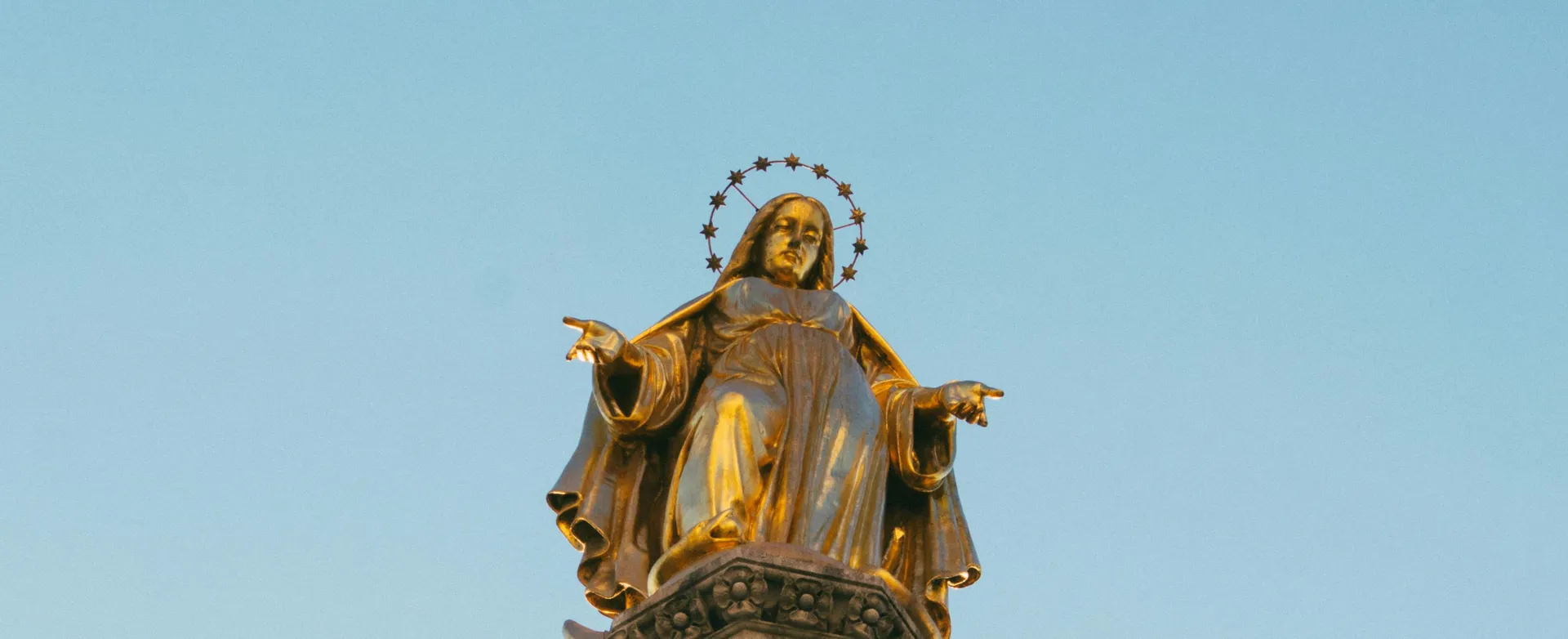
Iconography of Marian Apparitions
MMN|
Editorial Team
Catholic tradition recognizes numerous Marian apparitions, each with distinctive visual characteristics that help the faithful identify and venerate specific manifestations of the Blessed Virgin. For art lovers, collectors, and devotees, understanding these iconographic differences enriches appreciation for religious art and prevents confusion between similar but distinct apparitions. This article explores the key visual features distinguishing Our Lady of the Miraculous Medal from other major Marian apparitions, particularly Our Lady of Lourdes, while examining broader patterns in Marian artistic representation.
Our Lady of the Miraculous Medal: The Immaculate Conception Image
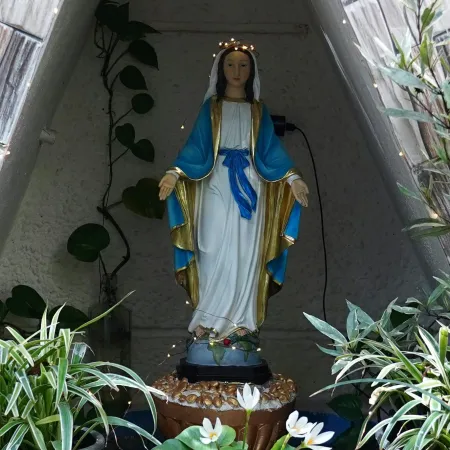
The Miraculous Medal depicts Mary as she appeared to St. Catherine Labouré on November 27, 1830, with very specific characteristics that distinguish it from other Marian representations. Mary stands upright in full-length figure facing forward, a frontal pose that differs from many other apparitions where Mary appears in three-quarter view or profile. She stands on a globe representing the world, often shown as sphere beneath her feet, symbolizing her queenship over all creation and universal motherhood. Her arms are extended downward and slightly outward at approximately 45-degree angle from her body, palms facing forward, in a distinctive gesture of offering graces. Beams of light emanate from her hands, specifically from rings on her fingers—some rings emit bright rays (graces given), others don’t (graces people forget to ask for). This detail is unique to the Miraculous Medal.
She wears a white robe symbolizing purity covered by a blue mantle or veil, the traditional Marian color representing heaven, truth, and fidelity. The blue is typically medium to dark shade. Often, though not always depicted on medals, a serpent appears crushed under Mary’s foot, referencing Genesis 3:15 and her role as New Eve defeating Satan. Surrounding her figure are the words “O MARY CONCEIVED WITHOUT SIN PRAY FOR US WHO HAVE RECOURSE TO THEE” (or abbreviated versions). This explicit reference to Immaculate Conception is central to the image’s identity. The entire composition is typically contained within an oval border, though circular versions exist.
The reverse side features a large capital M dominating the center, representing Mary, with a cross rising from the base of the M’s right leg and extending above the letter. The cross and M together symbolize Mary’s participation in Christ’s redemptive work. Below the M appear two hearts side by side: the Sacred Heart of Jesus on the left, crowned with thorns and often shown flaming, and the Immaculate Heart of Mary on the right, pierced by a sword and also often flaming. Sometimes twelve stars surround the reverse design, referencing Revelation 12:1 (“a woman clothed with the sun, with the moon under her feet, and on her head a crown of twelve stars”). The key distinguishing elements include rays from hands (unique to this apparition), explicit Immaculate Conception inscription, globe under feet, M surmounted by cross on reverse, and two hearts below.
Our Lady of Lourdes: The Grotto Apparition
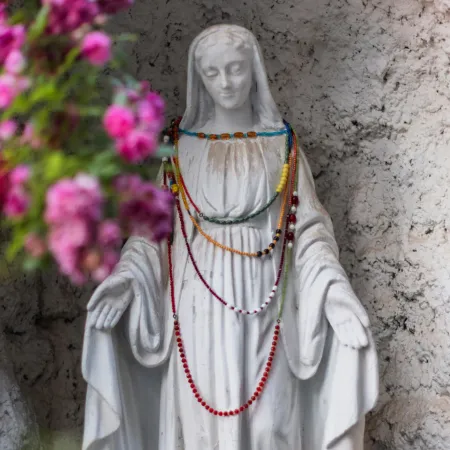
Our Lady of Lourdes appeared to St. Bernadette Soubirous eighteen times in 1858, seventeen years after the Miraculous Medal apparition. While both involve French visions of Mary, their visual representations differ significantly. Mary is typically shown in or before a grotto (cave), referencing the Massabielle grotto where apparitions occurred. The rocky background is essential to Lourdes iconography. Mary appears as young woman, approximately 16-18 years old, matching Bernadette’s description. This is notably younger than some other Marian depictions showing more mature women.
Unlike the Miraculous Medal’s white robe with blue mantle, Lourdes shows Mary in entirely white dress with blue sash around waist. The white emphasizes purity; the blue sash adds modest color accent. Mary holds a rosary, which she prayed with Bernadette during apparitions. The rosary is prominently displayed, often hanging from her joined hands or held in her right hand. This emphasis on Rosary prayer distinguishes Lourdes from the Miraculous Medal. Rather than extended with rays, Mary’s hands are typically joined in prayer position at chest level, or holding the rosary. This prayerful posture contrasts with the Miraculous Medal’s grace-giving gesture.
Golden roses often appear at Mary’s feet, referencing the miracle where roses bloomed at the apparition site despite winter season. These flowers are signature Lourdes element. Mary is typically shown barefoot, as Bernadette reported, emphasizing humility and poverty. Unlike the Miraculous Medal, Lourdes imagery doesn’t include globe under feet, and traditional Lourdes images don’t include textual inscriptions within the image itself (though captions may be added separately). Lourdes depictions often emphasize supernatural light surrounding Mary, with rays emanating from her entire figure rather than just her hands. The key distinguishing elements include grotto/rocky setting, white dress with blue sash (not separate mantle), rosary in hands, joined hands in prayer (not extended), yellow roses at feet, barefoot appearance, young age portrayal, and absence of globe or inscription.
Comparative Analysis: Miraculous Medal vs. Lourdes
The two apparitions show clear distinctions across multiple dimensions. The Miraculous Medal appeared in 1830 to St. Catherine Labouré in a Paris chapel, with Mary appearing mature, wearing white robe and blue mantle, hands extended emitting rays, standing on globe often with serpent, featuring rays from hands as key symbol, no specific background, including Immaculate Conception inscription, focusing on wearing medal and receiving graces, and associated with wearing medal and invoking Mary. In contrast, Lourdes appeared in 1858 to St. Bernadette Soubirous in the Lourdes grotto, with Mary appearing young (16-18 years), wearing white dress with blue sash, hands joined in prayer holding rosary, barefoot with yellow roses at feet, featuring rosary as key symbol, set in grotto/cave environment, without inscription, focusing on penance, prayer, and conversion, and associated with Rosary prayer and bathing in spring water.
Other Major Marian Apparitions: Key Visual Differences
Our Lady of Guadalupe (1531, Mexico) appears on indigenous cloak (tilma), not as statue or painting, with dark skin and native Mexican facial features. She wears a black ribbon around waist indicating pregnancy, and her blue-green mantle is covered with stars. She stands on crescent moon surrounded by sun’s rays, supported by angel with eagle wings, and her dress is decorated with indigenous floral motifs. Unlike many Madonna images, she doesn’t hold infant Jesus.
Our Lady of Fatima (1917, Portugal) wears white robe and mantle similar to traditional depictions, often shown crowned as Queen of Heaven, and holds rosary like Lourdes. She is associated with three shepherd children visionaries and connected to famous “Miracle of the Sun.” Sacred Heart of Jesus and Immaculate Heart of Mary are often shown nearby, and her message focuses on three secrets, consecration of Russia, and penance.
Our Lady of Czestochowa (Black Madonna, Poland) features both Mary and Jesus with dark/black skin, and displays two parallel scars on Mary’s right cheek from historical attack. She is depicted as Madonna and Child holding Jesus, not alone, typically shown against red background. Both figures wear crowns (added later, not original), and the image follows Byzantine iconographic style, very different from Western apparitions.
Our Lady of Knock (1879, Ireland) appears as group apparition with St. Joseph, St. John, angels, and Lamb of God. Mary wears simple white garments, less ornate than other apparitions, and wears crown. She appears on altar-like structure, reflecting Irish Catholic devotion.
The “Marian Blue”: Color Symbolism in Marian Art
One consistent element across most Western Marian apparitions is the use of blue, though shades and applications vary. Blue’s association with Mary dates to Middle Ages when ultramarine pigment (made from lapis lazuli) was most expensive color available. Using it for Mary’s garments demonstrated both devotion and wealth. Over time, blue became traditionally associated with Mary regardless of cost considerations.
Blue carries rich symbolic meanings in Marian art. It represents heaven, connecting Mary to divine realm through its association with sky. In medieval symbolism, blue signified truth and fidelity. Paradoxically, blue also represented humility, perhaps because Mary, though Queen of Heaven, remained humble servant. Lighter blues suggest purity and innocence, while deep blues indicate royal status, honoring Mary as Queen of Heaven.
Shade variations reflect different traditions. The Miraculous Medal uses medium to dark blue mantle, Lourdes employs lighter blue sash, Guadalupe features blue-green (turquoise) mantle with stars, Renaissance Madonnas often display deep ultramarine, and modern depictions show wide range from pale sky blue to deep navy. Different cultures adapt blue to local preferences: Latin America often uses vibrant turquoise or teal, Asia may incorporate local blue traditions such as indigo in Japan or porcelain blue in China, Africa features rich deep blues or incorporation of traditional textile patterns, and Eastern Europe often prefers darker, more somber blues.
Religious Metaphors in Marian Art
Beyond literal representation, Marian apparitions employ rich symbolic language. Nearly all apparitions depict Mary surrounded by or emitting light, symbolizing divine presence and glory, truth illuminating darkness, grace radiating to humanity, and holiness visible to human eyes. In Miraculous Medal, rays specifically represent graces; in Lourdes, overall radiance suggests supernatural nature; in Fatima, intense light accompanied apparitions.
Positioning and posture carry theological meaning. Standing indicates authority, active presence, and readiness to help. Extended hands signify offering, giving, and blessing (as in Miraculous Medal), while joined hands represent prayer, intercession, and humility (as in Lourdes). Position on globe or crescent demonstrates dominion over earth and victory over evil, and barefoot appearance emphasizes poverty, humility, and connection to earth.
Accompanying symbols enrich the narrative. The serpent represents evil defeated (Miraculous Medal, Guadalupe), roses symbolize beauty, martyrdom, and miracles (Lourdes, Rose mysteries of Rosary), stars indicate heavenly queen and guidance (Guadalupe, traditional Madonna), the cross signifies redemption and sacrifice (Miraculous Medal reverse), hearts represent love, suffering, and compassion (Miraculous Medal, Fatima), and the rosary embodies prayer, meditation, and contemplation (Lourdes, Fatima).
Color symbolism extends beyond blue. White represents purity, innocence, resurrection, and joy. Gold and yellow signify divinity, glory, kingship, and miracles. Red embodies love, sacrifice, martyrdom, and Holy Spirit. Green suggests life, hope, and renewal. Purple indicates penitence, royalty, and preparation for Advent and Lent.
Artistic Styles Across Eras
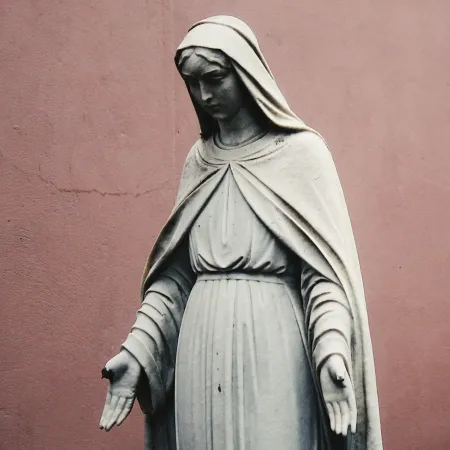
Marian apparitions have been depicted in various artistic styles reflecting their times. Nineteenth-century depictions of the Miraculous Medal and Lourdes feature romantic realism with emotional expressiveness, detailed naturalism, dramatic lighting, and emphasis on visionary experience. Early twentieth-century Fatima imagery shows more photographic realism with documentary approach, less idealization and more authenticity, reflecting influence of photography on visual culture. Contemporary interpretations display diverse styles from traditional to abstract, cultural inculturation through African, Asian, and Latin American styles, minimalist approaches, digital media and new technologies, and emphasis on accessibility and relatability.
Conclusion: Seeing With Faith
Understanding the visual distinctions between Marian apparitions enriches both aesthetic appreciation and devotional practice. Each apparition’s unique iconography communicates specific theological emphases, spiritual messages, and cultural contexts. The Miraculous Medal’s rays of grace, Lourdes’ rosary and grotto, Guadalupe’s indigenous features, Fatima’s apocalyptic urgency—each tells different aspect of Mary’s multifaceted role in salvation history.
For art collectors, recognizing these distinctions helps authenticate pieces and understand their proper context. For devotees, it deepens appreciation for how Mary meets diverse human needs through varied manifestations. For theologians, it reveals how visual theology communicates truths beyond words. Ultimately, all Marian apparitions point beyond themselves to Christ. Mary never draws attention to herself but always directs viewers to her Son. Whether through the Miraculous Medal’s mediation of graces, Lourdes’ call to prayer and penance, or Guadalupe’s maternal embrace of indigenous peoples, Mary’s mission remains constant: “Do whatever He tells you” (John 2:5). As we contemplate these beautiful images, may they draw us closer not only to Mary but through her to Jesus, the source of all grace and the object of all our devotion.
Explore more about religious art and iconography in our Works Collection or learn about authentic Marian devotional items in our Supply Guide.